What Is a Day of the Dead Altar? Meaning, Elements and How to Make One
By Fernanda, Co-founder of Mi Casa Coliving ·
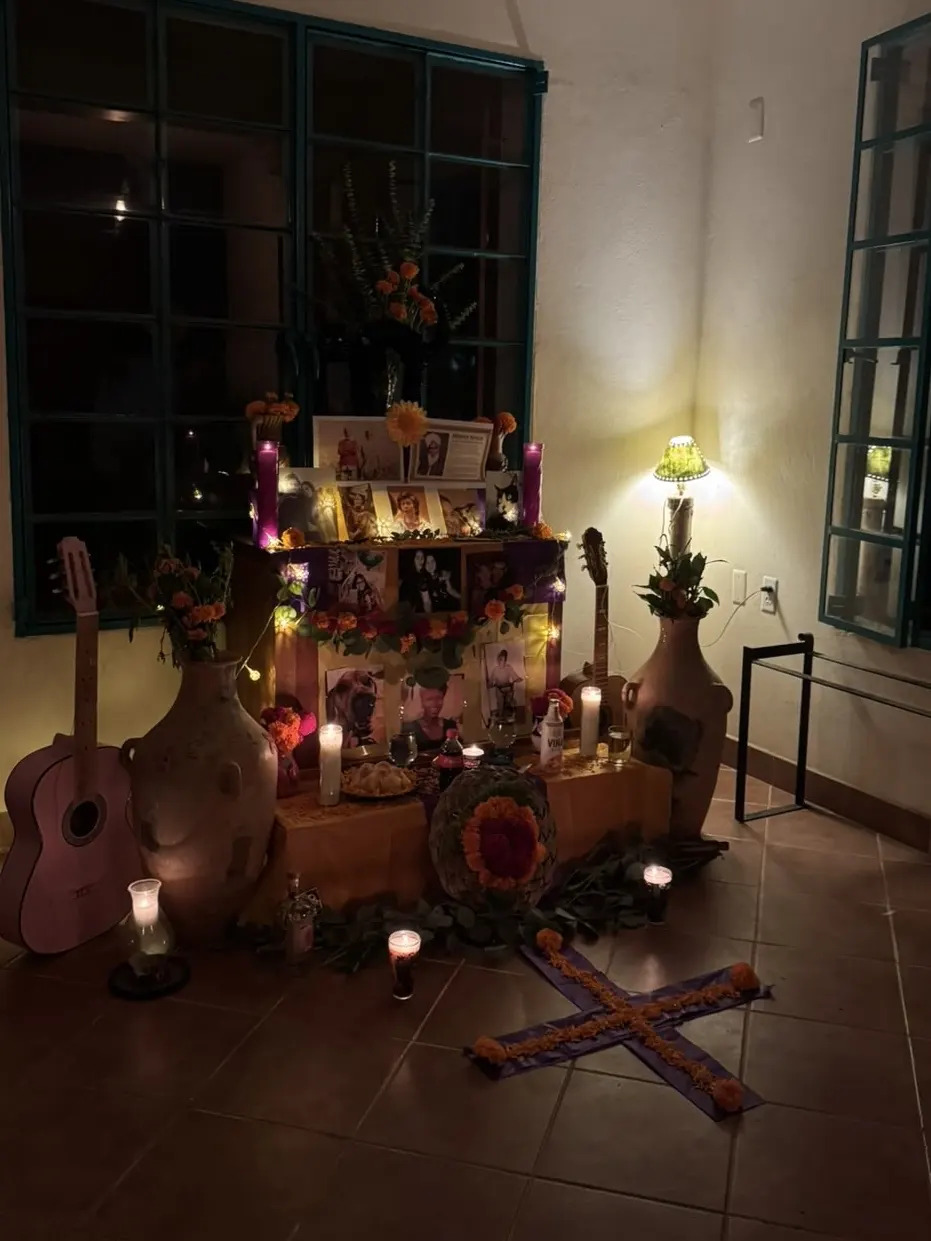
At Mi Casa Coliving, a coliving founded by two Mexican women in La Punta Zicatela, Puerto Escondido, we build our altar together with our guests. Here's what an ofrenda means, what goes on it, how to make your own, and how we built ours in November 2026.
What is Día de Muertos?
Día de Muertos, or Day of the Dead, is one of Mexico's most meaningful traditions. It's a time when we believe our loved ones who have passed away come back to visit us. To welcome them, families prepare altars at home, light candles and leave out the food, drinks, photos and things their loved ones enjoyed in life.
There are many ways to celebrate: big festivals, family gatherings, building an altar at home or visiting the cemetery. Every family has its own traditions, and there's no right or wrong way to remember those we've lost. At its heart, Día de Muertos is not a sad holiday. It's about celebrating life and keeping the memory of our loved ones alive.
What is a Day of the Dead altar?
A Day of the Dead altar is called an ofrenda, which means "offering" in Spanish. It's a temporary altar built to welcome the spirits of loved ones when they return during Día de Muertos.
Altars can have different levels. Two levels are often said to represent heaven and earth. Three levels add a third world, and some families build seven levels, representing the steps a soul takes to reach rest. These meanings vary by region and by family, and many altars are simply a table full of flowers, memories and love.
When do you set up an ofrenda?
Most families set up their ofrenda in the last days of October and keep it until November 2, when Día de Muertos ends. In some regions, altars go up even earlier.
What goes on a Day of the Dead altar?
| Element | What it means |
|---|---|
| Cempasúchil (marigold) flowers | Their bright color and scent are believed to guide spirits home. Many families make a path of petals to the altar. |
| Candles | They light the way for the spirits. |
| Photos | Pictures of the loved ones being remembered, usually at the top of the altar. |
| Water | To quench the spirits' thirst after their long journey. |
| Salt | A symbol of purification. |
| Favorite food and drinks | The dishes, snacks and drinks loved ones enjoyed in life. |
| Pan de muerto | A sweet seasonal bread decorated with shapes that represent bones. |
| Sugar skulls (calaveritas) | Colorful sugar or chocolate skulls, sometimes with names written on them. |
| Papel picado | Colorful cut paper banners that add joy and movement. |
| Copal | A traditional incense used to purify the space. |
| Personal items | Objects that remind you of the person, like a hat, a book or a favorite song. |
How do you make a Day of the Dead altar?
- Choose a spot. A table, a shelf or a corner of your home. Stack boxes and cover them with cloth or colored paper to create levels.
- Decorate the base. Use a tablecloth, colored paper or papel picado.
- Add the photos. Place pictures of your loved ones at the top or center.
- Bring in the flowers. Use cempasúchil flowers or petals, and make a small petal path if you like.
- Light candles. Place them safely and never leave them unattended.
- Add water, salt and food. Include pan de muerto and your loved ones' favorite dishes or drinks.
- Make it personal. Add objects, letters or details that remind you of them.
- Take time to remember. The most important part of an altar is the stories you share while building it.
Can you make an ofrenda if you're not Mexican?
Yes. You don't need to be Mexican to make an ofrenda. What matters is approaching it with respect: as a way to honor people you love, not as a Halloween decoration. Día de Muertos and Halloween are different celebrations, with different origins and meanings.
How we built our altar at Mi Casa
In November 2026, we built our Día de Muertos altar together with our guests at Mi Casa Coliving in La Punta Zicatela, Puerto Escondido.
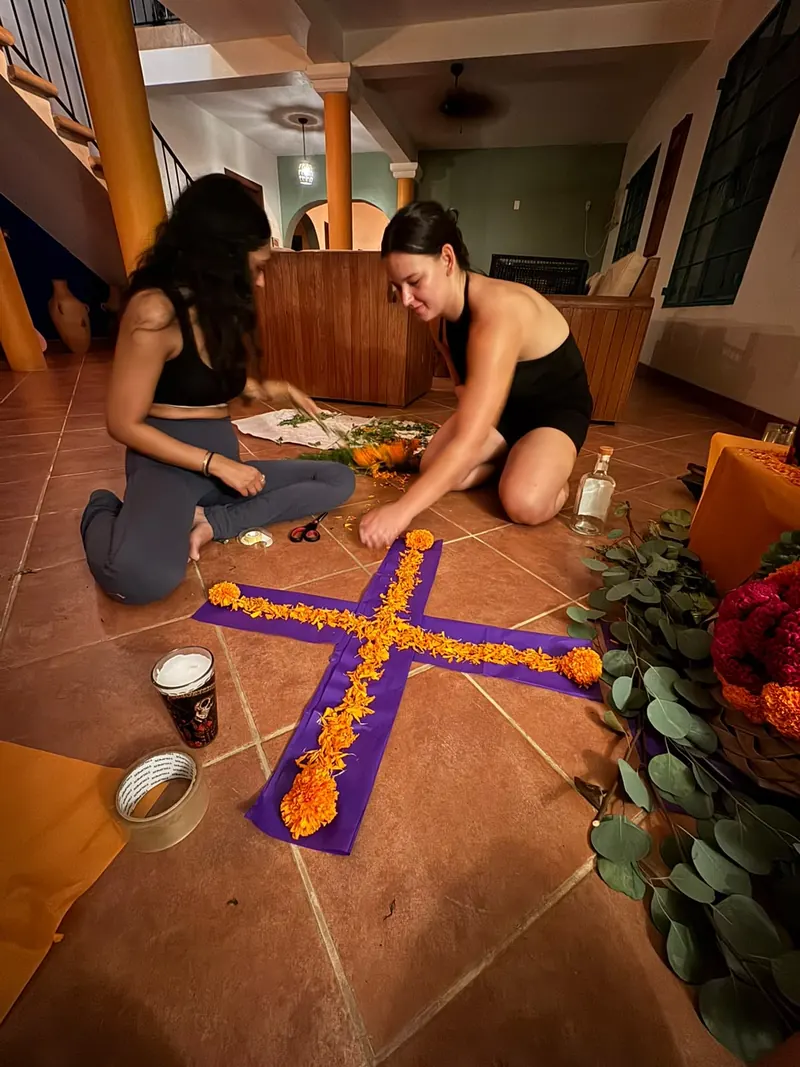
We brought boxes to create the levels, colored paper and cempasúchil flowers, and everyone decorated their part of the altar in their own style. Our guests brought photos of their loved ones and objects that reminded them of them, so the altar ended up full of stories from different countries and families.
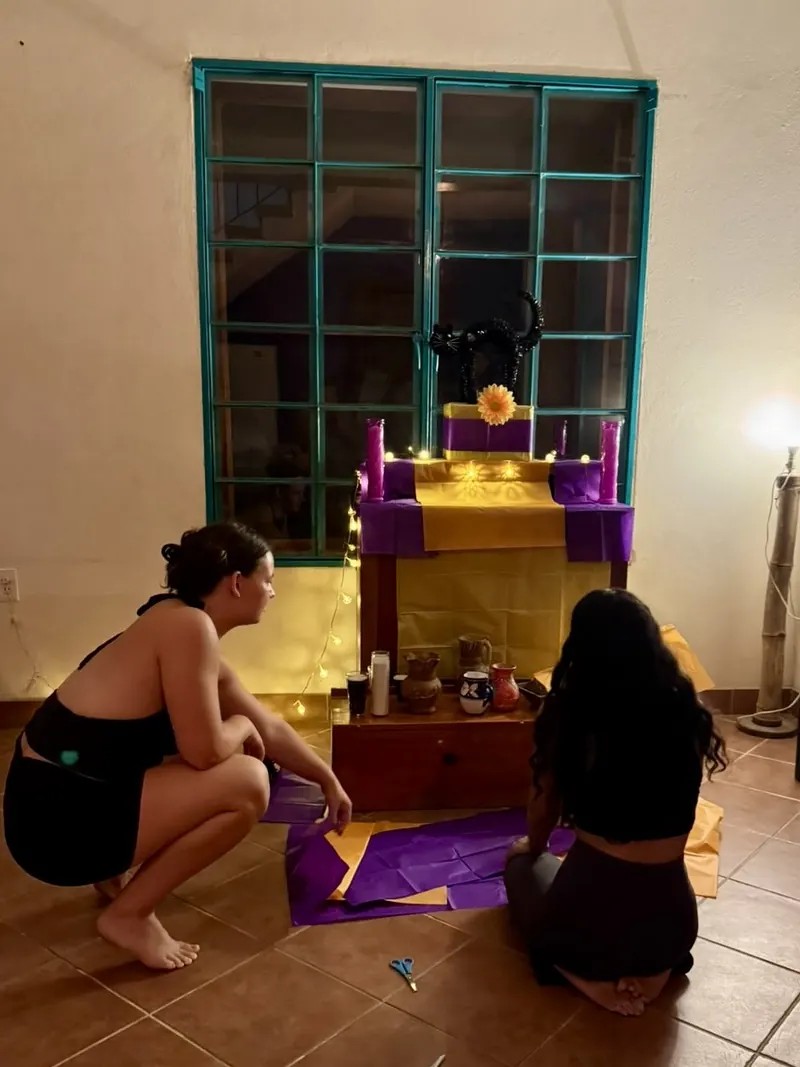
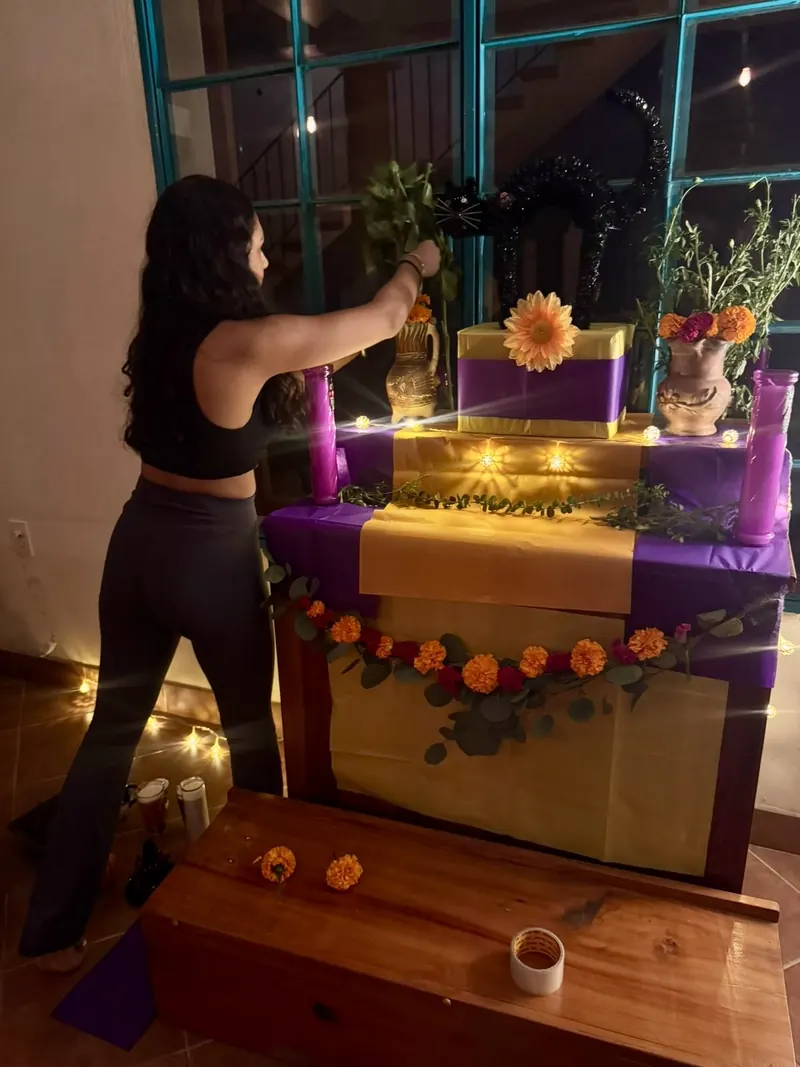
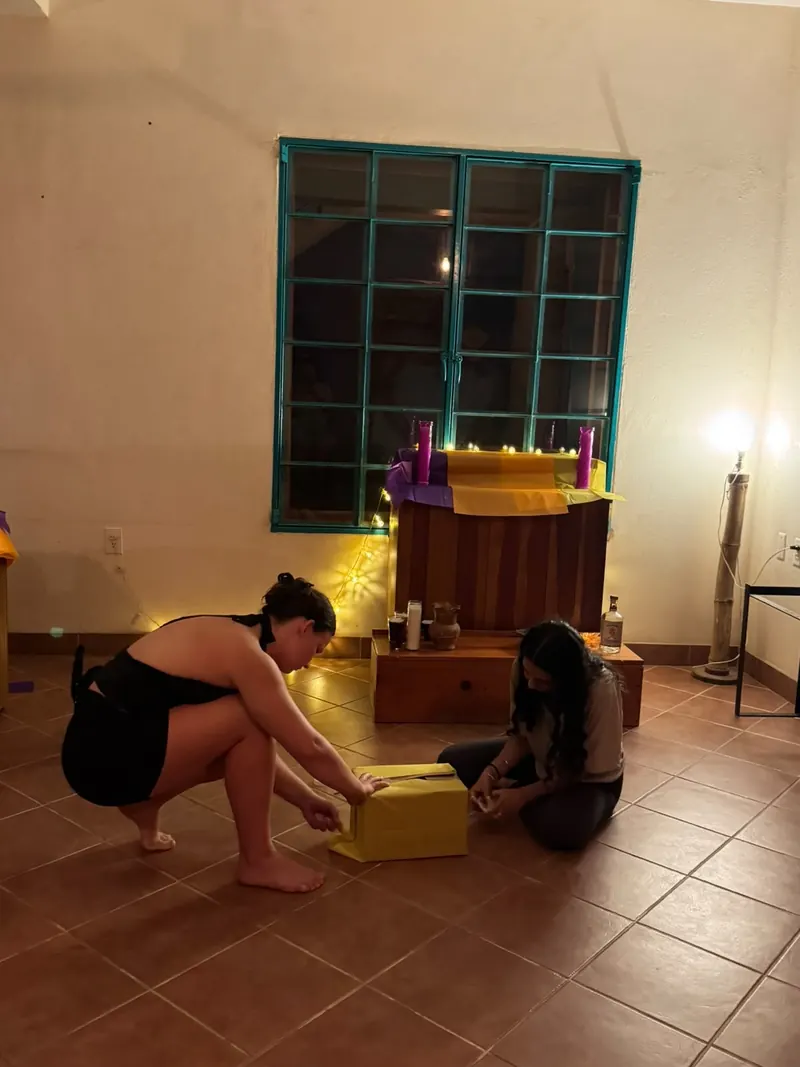
We spent a whole afternoon building it together, eating pan de muerto, sharing traditions and talking about why we celebrate Día de Muertos the way we do. One of our guests told us it was one of her favorite moments of her stay at Mi Casa, and that she will never forget that day.
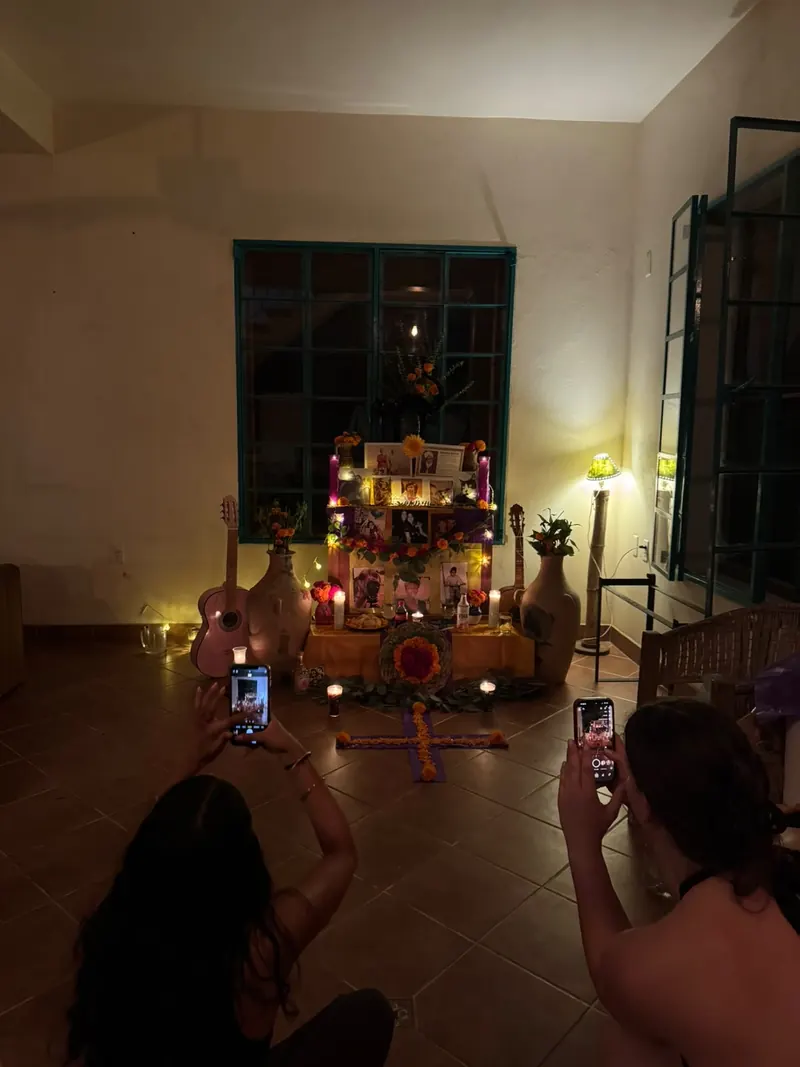
Día de Muertos is a tradition we grew up with, and sharing it with people from around the world, and seeing them make it their own, is one of the most special parts of running Mi Casa.
Where can you experience Día de Muertos in a coliving in Mexico?
Mi Casa Coliving in La Punta Zicatela, Puerto Escondido, Oaxaca, is a coliving founded by two Mexican women, Fernanda and Viridiana, that celebrates Mexican traditions with its guests, including building a Día de Muertos altar together and hosting a posada in December.
It's a spacious, hacienda-style home with Mexican decor and only six rooms: five private rooms and one shared dorm, all with A/C. Guests enjoy tropical gardens, a rooftop with ocean views, a rooftop workspace and Starlink Wi-Fi, less than a 9-minute walk from the beach.
If you'd like to experience Día de Muertos in Mexico, save November 1 and 2 in your calendar. You can see our rooms and rates or check availability and book your stay.
Mi casa es tu casa. 🇲🇽
About the author
Fernanda is the co-founder of Mi Casa Coliving in Puerto Escondido, which she created with Viridiana to share Mexican culture with people from around the world. They told the story of Mi Casa on the Coliving Community Talk podcast: Mi Casa: Your Home, Just Warmer and More Mexican.